Congratulations—you bought a house.
- Change the locks.
- Figure out the furnace filter.
- Clean the gutters.
- Find the water shutoff.
- Wonder why the previous homeowner needed that many extension cords.
But there’s one of the largest moving systems in your home that probably hasn’t made the list yet:
Your garage door.
If you recently bought a home, you likely have no idea how the previous owner maintained the garage door, how old the springs are, when the opener was installed, or whether that strange noise is normal.
And in Chicagoland, winter has a way of exposing problems that were easy to ignore during warmer weather.
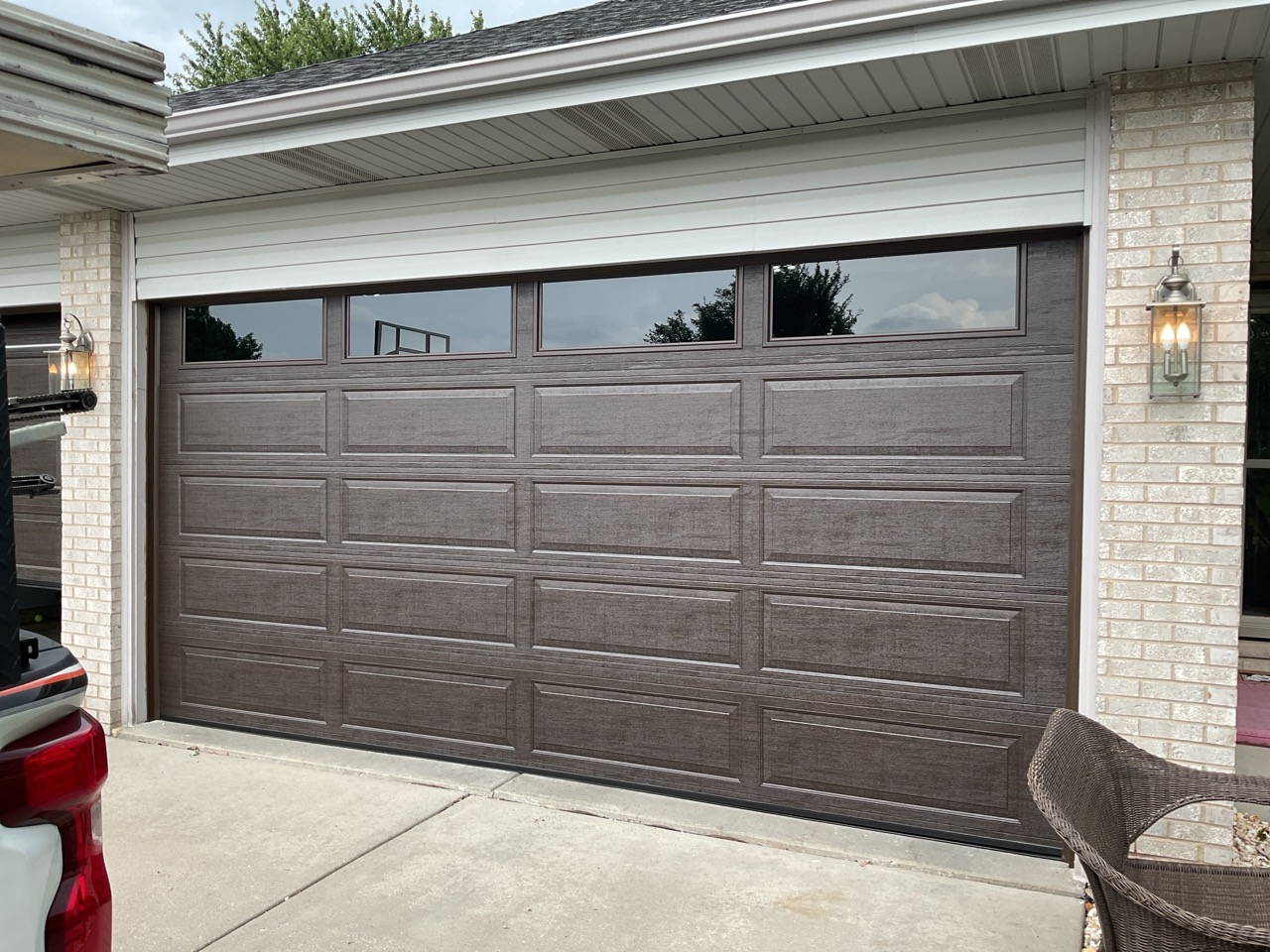
Before the temperatures drop, spend a few minutes checking these five things.
1.Look for Daylight Around Your Garage Door
This might be the easiest garage door inspection you’ll ever do.
Close the garage door during the daytime, turn off the garage lights, and take a look around the perimeter.
Do you see daylight?
A little light around certain areas doesn’t automatically mean something is seriously wrong, but noticeable gaps can indicate worn weather seals, an uneven floor, a door that isn’t sitting correctly, or deteriorated perimeter weatherstripping.
Pay particular attention to the bottom rubber seal.
- Cracked
- Brittle
- Flattened
- Torn
- Missing in sections
That matters a lot more once winter arrives.
A good seal helps reduce drafts and keeps snow, water, leaves, dirt, and pests from making their way into the garage.
Why new homeowners should care
If your garage is attached to your house—or there’s living space above it—the condition of your garage door and its seals can affect how comfortable the surrounding areas feel.
And if you haven’t experienced your first winter in the house yet, you don’t know how that garage is going to perform when temperatures really drop.
Finding a worn seal in September is a lot better than discovering it during the first snowstorm.
2.Listen to Your Garage Door
Yes, seriously.
Open and close the door a few times and listen to it.
Your garage door doesn’t need to be silent, but it also shouldn’t sound like it’s fighting for its life every time you leave for work.
- Grinding
- Squeaking
- Popping
- Scraping
- Rattling
- Sudden banging
- A motor that sounds like it’s struggling
Also watch the door while it moves.
Does it travel smoothly?
Does one side appear to move differently than the other?
Does it shake?
Does it hesitate?
Does the opener seem to strain while lifting the door?
Those can all be clues that something deserves a closer look.
Don’t assume “it’s always done that” means it’s normal.
That’s especially important when you’ve just purchased the home.
The previous homeowner may have lived with a problem for years. You don’t have to inherit their definition of “normal.”
3.Take a Look at the Springs, Cables, Rollers and Hardware
You don’t need to be a garage door technician to perform a basic visual inspection.
You just need to know what you’re looking for.
With the garage door closed, take a look at the major components of the system.
Springs
Depending on the system, you may have a torsion spring mounted above the door or another type of spring system.
Look for anything that appears broken, heavily rusted, stretched, or unusual.
Do not attempt to adjust or repair garage door springs yourself.
Garage door springs store a significant amount of energy. Spring and cable repairs are jobs we strongly recommend leaving to a trained garage door technician.
Cables
Look at the cables running along the sides of the door.
- Fraying
- Rust
- Loose strands
- Cables that don’t appear to be sitting correctly
If a cable looks damaged, don’t start pulling on it or trying to reposition it.
Rollers
Your rollers help guide the garage door through the tracks.
- Worn
- Cracked
- Crooked
- Loose
- Damaged
Hinges and Hardware
Take a quick look at the hinges, brackets, and visible hardware.
You aren’t trying to perform a professional inspection. You’re simply looking for something that obviously doesn’t look right.
And one important warning:
Not every bolt on a garage door is a DIY tightening project. Some components are connected to parts of the system that are under tension.
When in doubt, leave it alone and have it inspected..
4.Test the Garage Door Opener’s Safety Features
Your garage door opener does more than save you from getting out of the car.
Modern garage door operator systems include important safety features that should be checked periodically.
If you just moved into the house, now is a great time to familiarize yourself with them.
Check the Photo Eyes
Near the bottom of the garage door tracks, you’ll typically find two small sensors facing each other.
These are commonly called photo eyes or safety sensors.
- Both sensors are securely mounted
- Nothing is blocking them
- They appear aligned
- The lenses are clean
- The door responds appropriately when the beam is interrupted
Check the Door’s Reversal System
Your garage door should properly reverse when it encounters an obstruction.
The exact testing procedure can vary depending on your opener, so check the manufacturer’s instructions for your specific model.
If the safety system doesn’t work properly, don’t ignore it.
Check Your Remotes and Keypad
Moving into a new house is also a good opportunity to think about access.
Ask yourself:
How many garage door remotes are floating around from the previous homeowner?
If you don’t know, consider clearing the opener’s existing remote programming and reprogramming only the devices you control. Follow the manufacturer’s instructions for your particular opener.
It’s basically the garage-door version of changing the locks.
Check for Battery Backup
Some garage door openers have a battery backup system.
- How old the battery is
- Whether the opener indicates that the battery is healthy
- When it was last replaced
You’ll appreciate knowing the answer before a winter power outage.
5.Figure Out What Garage Door and Opener You Actually Own
This one gets overlooked constantly.
You bought the house.
But what exactly came with it?
Take five minutes and become familiar with your garage door system.
Look for labels or manufacturer information on the garage door and opener.
Garage Door
- Manufacturer
- Model, if available
- Approximate age
- Insulated or non-insulated
- Overall condition
Garage Door Opener
- Manufacturer
- Model number
- Approximate age
- Drive type
- Battery backup, if equipped
- Wi-Fi/smart-home capabilities, if equipped
Common opener manufacturers include brands such as LiftMaster, Chamberlain, Genie, and others.
Your garage door may also have manufacturer or model information located on labels attached to the sections.
Why does this matter?
Because eventually you’re going to need a part, service, a replacement remote, or professional help.
Knowing what you own makes that conversation much easier.
It also gives you a baseline.
You may discover that the beautiful house you just purchased has a garage door system that’s been operating for many years without much attention.
That doesn’t automatically mean it needs to be replaced.
It means you should know what you’re working with.
BONUS: Is Your Garage Door Actually Insulated?
If this is your first winter in the home, this is worth figuring out.
Not all garage doors provide the same level of insulation.
Depending on the construction of your door, you may have a non-insulated door, a door with insulation added to it, or a multi-layer insulated garage door.
If your garage is attached to your home, insulation may be particularly important to you.
You may also see an R-value associated with an insulated garage door. Generally, a higher R-value indicates greater resistance to heat transfer.
But don’t assume that replacing your garage door is automatically necessary just because it’s older or has a lower insulation value.
The condition of the door, how the garage is used, the surrounding construction, your comfort goals, and your budget all matter.
A good garage door professional should be able to explain your options without immediately telling you that you need a new door.
The 10-Minute New Homeowner Garage Door Check
Before winter, take ten minutes and run through this list:
That last one is more important than you might think.
Don’t Wait Until the Door Won’t Open
Garage doors have an impressive ability to choose inconvenient times to stop working.
The morning you’re already late for work.
The first freezing day of the year.
When the car is inside the garage.
Or right before everyone arrives for the holidays.
Not every garage door problem can be predicted, but paying attention to your system can help identify worn or damaged components before they become a bigger inconvenience.
And if you’ve just bought the house, having the system professionally inspected gives you something the previous homeowner couldn’t leave behind:
A fresh starting point.
New House? Let Us Introduce You to Your Garage Door.
Overdoors of Illinois has been helping homeowners with their garage doors since 1954.
We’re a local, family-owned and operated company serving homeowners throughout Chicagoland, and we’ve worked on just about every type of garage door problem you can imagine.
If you’re a new homeowner and have absolutely no idea whether your garage door is in great shape or one cold morning away from ruining your plans, that’s okay.
That’s what we’re here for.
Our technicians can inspect your garage door and opener system, explain what you have, identify items that deserve attention, and help you understand what can wait.
No guessing. No unnecessary replacing. Just straightforward information about your garage door.
Need Garage Door Service Before Winter?
Whether you need a repair, new weather seals, opener service, maintenance, or you’re thinking about replacing an older garage door, Overdoors of Illinois can help.
Overdoors of Illinois
We Sell the Best and Service the Rest — Since 1954.
Schedule your garage door service today and head into your first winter in your new home knowing your garage door is ready for it.
Frequently Asked Questions
Should I have my garage door inspected after buying a house?
If you don’t know the maintenance history of the garage door, an inspection can help establish its current condition. A technician can look at the door, spring system, cables, rollers, hardware, opener, and safety components and identify items that may require attention.
How do I know if my garage door needs new weatherstripping?
Look for cracked or hardened rubber, missing sections, obvious gaps, or daylight around the closed garage door. Water, snow, debris, or noticeable drafts entering around the door can also indicate that the seals deserve attention.
Should I lubricate my garage door before winter?
Certain garage door components may benefit from proper lubrication, but it’s important to use an appropriate garage door lubricant and know which components should—and shouldn’t—be lubricated. If you’re unsure, ask your garage door technician during your next service visit.
Can I replace a garage door spring myself?
Garage door spring systems operate under significant tension and can cause serious injury if handled incorrectly. Spring replacement and adjustment should be performed by someone with the proper training, tools, and understanding of the system.
Does an insulated garage door make a difference during an Illinois winter?
An insulated garage door can reduce heat transfer through the door itself, which can be especially valuable for attached garages or garages used as work or living spaces. Overall garage temperature is also affected by air sealing, walls, ceilings, windows, and the rest of the structure.
How do I know how old my garage door opener is?
Start by finding the manufacturer and model label on the opener. Depending on the manufacturer, the label may include a manufacturing or date code. A garage door professional can also help identify the approximate age and available features of an older operator.
What should I do if my garage door suddenly won't open?
Don’t repeatedly force the opener to operate the door. Look for an obvious obstruction or a visibly broken component from a safe distance. If you see a broken spring, damaged cable, crooked door, or another significant issue, stop operating the system and contact a garage door professional.