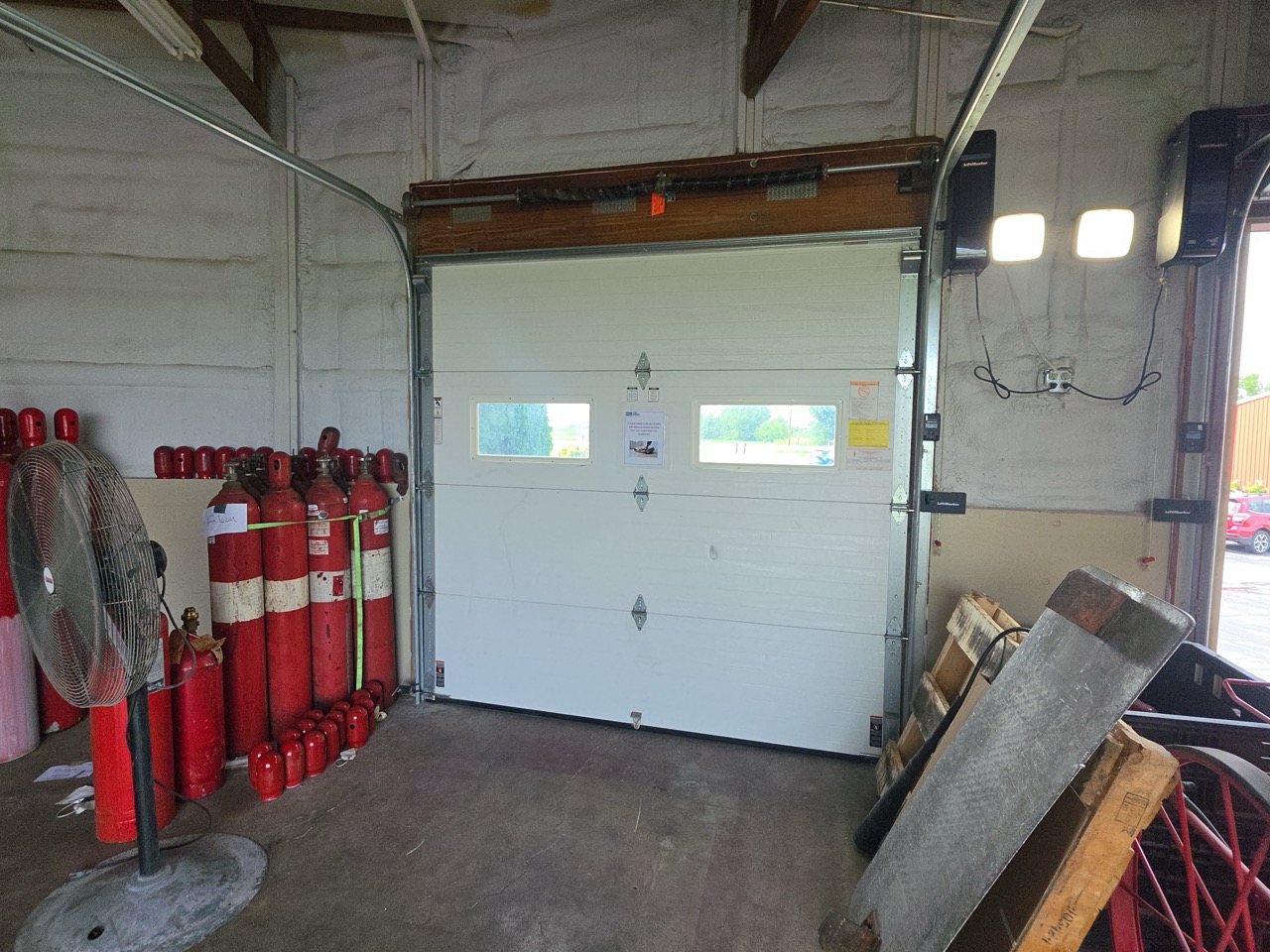
Commercial overhead doors are often easy to overlook when they’re working properly. They open in the morning, close at night, and keep trucks, forklifts, employees, materials, and equipment moving throughout the day.
But when a commercial door unexpectedly fails, the impact can extend well beyond the cost of repairing the door.
A failed door can take a loading position out of service, interrupt shipping and receiving, affect production, create security concerns, and potentially introduce safety hazards into a busy facility.
So, how often should commercial doors be inspected?
For high-traffic commercial facilities with frequently used overhead doors, Overdoors of Illinois generally recommends preventative maintenance every six months. However, there isn’t one maintenance schedule that’s right for every facility.
Before recommending a preventative maintenance schedule, we want to understand your facility, your equipment, and how your doors are actually being used. From there, we can help build a customized preventative maintenance program you can feel confident in.
Why Every Commercial Facility Needs a Different Maintenance Plan
Two identical commercial doors can have completely different maintenance needs.
Consider a distribution center with one shipping door that cycles throughout the day and another overhead door that is only opened a few times per week.
Even if both doors were installed at the same time, the high-traffic opening is experiencing considerably more wear.
That’s why commercial door inspection frequency should take several factors into consideration, including:
For many high-traffic facilities, six-month preventative maintenance is a good starting point. Other equipment or applications may warrant more or less frequent attention.
The goal isn’t to schedule unnecessary maintenance visits. It’s to establish a schedule
appropriate for how your facility actually operates.
That’s why commercial door inspection frequency should take several factors into consideration, including:
- Daily and annual cycle counts
- Door type and size
- Age and overall condition
- Previous repairs
- Recurring problems
- Exposure to weather and environmental conditions
- High-traffic openings
- Mission-critical openings
- Commercial operators and safety equipment
- Loading dock equipment
- Manufacturer recommendations
- Applicable codes or inspection requirements
- The facility’s operating schedule
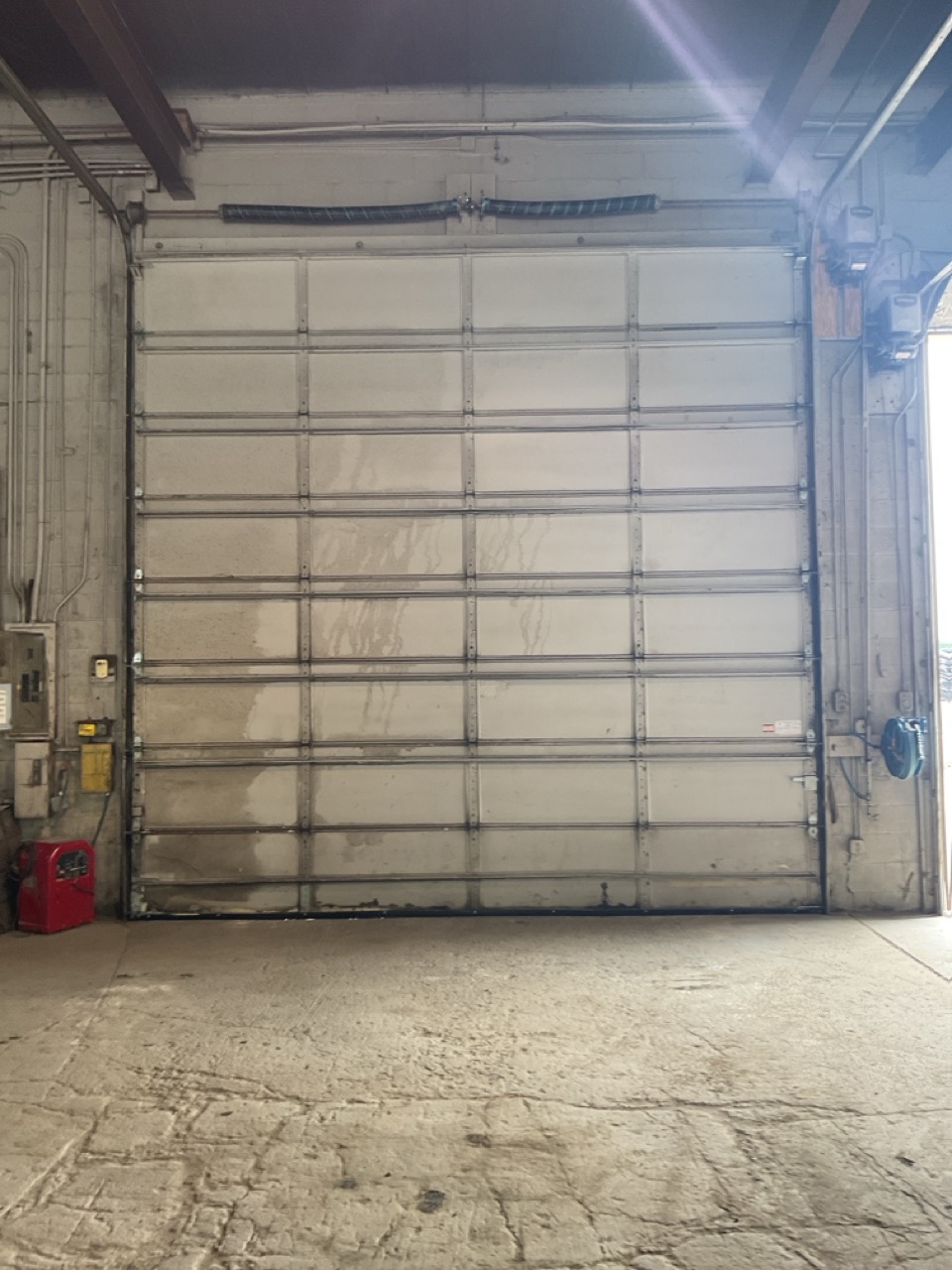
Why High-Traffic Commercial Doors May Need More Attention
A calendar doesn’t always tell the full story of a commercial door’s condition.
A door that operates five times per day experiences significantly different wear than one operating 50, 75, or 100+ times per day.
High-cycle commercial doors are commonly found at:
- Warehouses
- Distribution centers
- Manufacturing facilities
- Fire stations and emergency service facilities
- Automotive dealerships and service centers
- Retail receiving areas
- Food distribution facilities
- Municipal buildings
- High-volume loading docks
Facilities should also consider how important each opening is to the operation.
If one failed door could significantly interfere with shipping, production, vehicle movement, emergency response, or another critical function, that opening may deserve additional attention even if other doors at the same facility do not.
What Should Be Checked During a Commercial Door Inspection?
A commercial overhead door is a system made up of numerous components working together. A proper inspection should look beyond whether the door simply opens and closes.
Depending on the type of equipment, a commercial door inspection may include evaluating:
- Springs
- Cables
- Drums
- Rollers
- Hinges
- Tracks
- Bearings
- Fasteners and hardware
- Bottom fixtures
- Weatherseal
- Door balance and movement
- Commercial operators
- Controls
- Photo eyes
- Safety devices
- Entrapment protection
- Chain hoists
- Mounting and supporting components
- Signs of vehicle or forklift impact
- Unusual noises, movement, or vibration
The exact inspection will vary depending on the door, operator, application, and equipment installed at the opening.
Don’t Wait for Your Next Inspection if Something Doesn’t Look Right
A preventative maintenance schedule doesn’t mean a facility should ignore changes that occur between scheduled visits.
Employees and facility managers are often the first people to notice when something about a door changes.
Warning signs can include:
- Grinding, popping, or scraping noises
- Shaking or jerking during operation
- Uneven door movement
- Frayed or visibly damaged cables
- Damaged sections, tracks, or hardware
- A door that has been struck by a vehicle or forklift
- A door that won’t completely open or close
- An operator struggling to move the door
- Unexpected reversing
- Safety devices that aren’t operating properly
- A crooked or uneven door
- Changes in the speed or smoothness of operation
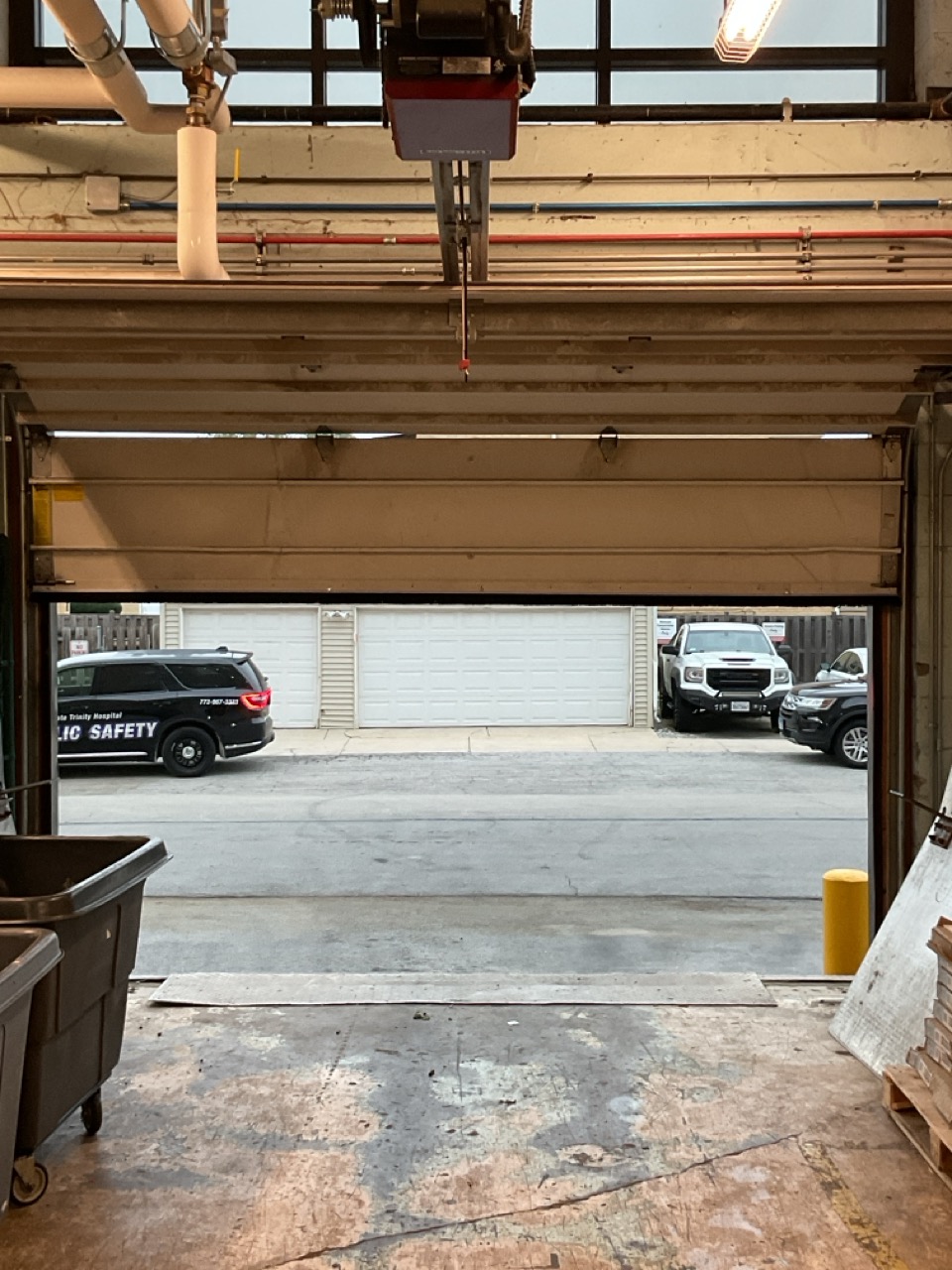
If a commercial door appears unsafe, employees should avoid attempting repairs themselves and follow the facility’s procedures for taking the equipment out of service and contacting a qualified commercial door professional.
Preventative Maintenance Is About Safety, Too
Preventative maintenance isn’t only about reducing repair costs or avoiding downtime. It can also play an important role in maintaining a safer environment around commercial doors.
Consider a heavily used sectional overhead door at a warehouse.
During a scheduled preventative maintenance inspection, a technician notices a lift cable beginning to fray.
The door may still open and close. To an employee who walks or drives through that opening every day, there may be no obvious indication that something is wrong.
But if the cable continues to deteriorate and eventually fails, the door could become uneven, jam in the opening, or move unexpectedly. Now that equipment problem has the potential to become a safety concern around employees, forklifts, vehicles, and materials moving through the area.
By identifying the deteriorating cable during preventative maintenance, the facility can address the problem before a complete failure occurs. The same concept applies to worn springs, loose hardware, damaged components, malfunctioning safety devices, operator problems, and impact damage.
Commercial overhead doors can be large, heavy pieces of moving equipment. Identifying developing problems isn’t just about extending equipment life. It’s also about giving your facility an opportunity to address potential hazards before they become more serious.
What About Commercial Fire Doors?
Fire-rated doors require additional consideration.
Unlike a standard commercial overhead door, a fire-rated door is part of a building’s fire protection system. Inspection, testing, and maintenance should follow the applicable codes, standards, manufacturer requirements, and requirements of the facility’s jurisdiction.
Overdoors of Illinois provides fire door inspections, drop testing, service, and repairs for commercial facilities throughout Chicagoland.
Facility managers should maintain appropriate documentation and make sure required inspections and testing aren’t overlooked as part of the facility’s overall door maintenance program.
How Overdoors Preventative Maintenance Programs Work
Knowing that your commercial doors should be inspected is only part of the challenge.
Someone still has to:
- Keep track of the equipment
- Determine appropriate service intervals
- Schedule inspections
- Identify developing problems
- Coordinate repairs
- Manage approvals
- Keep critical openings operational
That’s why Overdoors of Illinois offers customized preventative maintenance programs for commercial facilities throughout Chicagoland.
Instead of putting every customer on exactly the same schedule, we take the time to learn about the facility and build a program around its equipment and operational needs.
1. We Learn About Your Facility
The first step is understanding your operation.
Which doors get used the most?
Which openings are critical to shipping or production?
Are there doors that only operate occasionally?
Does the facility have rolling steel doors, fire doors, high-speed doors, commercial operators, or loading dock equipment?
Are there recurring problems?
When can maintenance be performed with the least disruption?
These are the types of questions that help us determine what your facility actually needs.
2. We Build a Customized PM Schedule
Once we understand the facility and its equipment, we can recommend an appropriate preventative maintenance schedule.
For many high-traffic commercial facilities, we recommend preventative maintenance every six months.
But that doesn’t mean every door necessarily needs to be treated identically.
A mission-critical shipping door operating throughout the day may deserve different attention than a low-use door elsewhere in the building.
A customized program allows maintenance resources to be focused where they make sense.
3. We Offer Flexible Scheduling
Your facility still has work to get done.
Taking a critical shipping door or loading position out of service at the wrong time can disrupt the same operation we’re trying to help protect.
That’s why flexible scheduling is an important part of our preventative maintenance programs.
Our commercial team works with facility managers to establish service intervals and schedule maintenance around the needs of the operation whenever possible.
The goal isn’t to interfere with your operation to maintain your doors.
The goal is to maintain your doors so they can continue supporting your operation.
4. Our Technicians Inspect the Equipment
During a scheduled preventative maintenance visit, our technicians evaluate the condition and operation of the equipment included in the program.
We’re looking for signs of:
- Normal wear
- Components approaching failure
- Damage
- Improper operation
- Potential safety concerns
- Operator or control problems
- Recurring issues
- Conditions that could contribute to a larger repair
This provides an opportunity to identify developing problems while the equipment is still operational.
5. A Pre-Authorized Repair Allowance Can Keep Small Repairs Simple
One of the ways a preventative maintenance agreement can be structured is with a pre-authorized repair allowance for each door.
This helps prevent a small maintenance item from becoming an administrative process every time something minor is discovered.
Here’s an Example
Suppose a company establishes a $150 pre-authorized repair allowance per door.
Our technicians arrive for the scheduled preventative maintenance visit and perform their inspections.
If a technician identifies a part that needs replacement and the necessary repair falls within that door’s $150 authorized amount, the technician can make the repair during the visit when practical and when the necessary parts are available.
There’s no need to stop the entire process to request approval for every small repair.
If the recommended repair exceeds the $150 authorization, we don’t simply perform a larger repair and surprise the facility with the bill.
Instead, the issue is documented and a quote is provided for the recommended repairs.
The facility can review the quote, approve the work, and determine the appropriate time to complete the repair.
The $150 amount is simply an example. The structure of a preventative maintenance agreement can be discussed with the customer based on the facility’s needs and approval procedures.
Why Use a Pre-Authorized Repair Allowance?
The advantage is efficiency without giving up cost control.
Without a pre-authorized amount, even a relatively small repair can require additional communication, approval, scheduling, and potentially another service visit.
With an established allowance, the process can look more like this:
Inspect the door → Find a small problem → Repair falls within authorization → Address the problem → Keep the door operational.
For a larger issue:
Inspect the door → Identify a significant problem → Repair exceeds authorization → Document the issue → Provide a quote → Facility approves the repair.
The facility maintains control over larger expenditures while giving technicians the ability to address certain smaller issues while they’re already on site.
How Preventative Maintenance Can Help Save a Facility Money
One of the biggest reasons we recommend preventative maintenance to the commercial facilities we service is the difference between a planned repair and an unexpected failure.
Consider a heavily used shipping door at a distribution center.
During its scheduled six-month preventative maintenance visit, a technician identifies a worn component that is approaching the end of its useful life.
The door is still operational.
If the repair falls within the facility’s pre-authorized amount, it may be addressed during the visit. If it’s a larger repair, the facility can receive a quote and schedule the work at an appropriate time.
Now consider what could happen without that inspection.
The worn component continues to deteriorate until it completely fails during a busy shipping day.
The door is now inoperable.
A loading position may be unavailable. Trucks may need to be moved. Forklift traffic may have to be redirected. Employees may have to change their workflow. Shipping or receiving may slow down while the facility waits for the door to be repaired.
And depending on the failure, continued operation or the failed component could potentially contribute to additional damage.
The facility may now be dealing with:
The original repair + potential additional damage + emergency service + operational downtime.
For many commercial facilities, the largest cost of a door failure isn’t necessarily the replacement part.
It’s what happens to the operation when the door isn’t available.
Preventative maintenance gives facilities an opportunity to identify certain developing problems early and turn potential unexpected failures into planned repairs that are easier to work around.
Preventative Maintenance Doesn’t Mean Your Door Will Never Break
It’s important to set realistic expectations.
No preventative maintenance program can guarantee that a commercial door will never fail.
Equipment wears. Components can break unexpectedly. Forklifts hit doors. Trucks back into equipment. Weather creates problems. Electronic components can fail without warning.
Preventative maintenance isn’t about promising that nothing will ever go wrong.
It’s about giving your facility a better opportunity to identify wear, damage, safety concerns, and developing problems before some of them become larger failures.
Why Overdoors Recommends Preventative Maintenance
Overdoors of Illinois has been servicing commercial door systems since 1954, and commercial doors often receive the least attention when they’re working correctly.
Unfortunately, that’s also when developing problems can be easiest to overlook.
We recommend preventative maintenance because it helps facilities take a proactive approach to three important areas:
Reliability
Regular inspections can identify wear and developing issues that could affect the reliability of the equipment your facility depends on.
Safety
Commercial doors operate around employees, forklifts, trucks, customers, and equipment. Identifying damaged or deteriorating components gives facilities an opportunity to address potential hazards.
Operational Continuity
Finding a problem before a complete failure may allow the facility to plan the repair around its operation instead of reacting to an unexpected breakdown.
For a warehouse, manufacturing plant, fire station, school, automotive facility, municipality, retail receiving area, or distribution center, a commercial door can be an important part of everyday operations.
A failed door can affect:
- Shipping and receiving
- Production
- Employee productivity
- Vehicle and forklift movement
- Loading dock availability
- Building access
- Security
- Temperature control
- Customer operations
- Facility safety
Preventative maintenance isn’t just about maintaining a door. It’s about helping protect the operation that depends on it.
Build a Preventative Maintenance Program Around Your Facility
If you manage a commercial facility and aren’t sure when your doors were last professionally
inspected—or how frequently they should be serviced—Overdoors of Illinois can help.
We don’t believe in giving every facility the same maintenance plan.
We’ll take the time to learn about your facility, understand how your doors and equipment are being used, identify high-traffic and mission-critical openings, and discuss an appropriate maintenance schedule.
For many high-traffic facilities, that means preventative maintenance every six months. For others, a different schedule may make more sense.
With customized PM schedules, flexible scheduling, pre-authorized repair options, and clear quoting for larger repairs, we can help build a preventative maintenance program your facility can feel confident in.
From commercial overhead doors and operators to rolling steel doors, fire doors, high-speed doors, and loading dock equipment, our goal is simple:
Help keep the equipment your facility relies on safe, reliable, and ready to work when you need it.
Ready to Build a Preventative Maintenance Plan?
Request a commercial site visit or contact Overdoors of Illinois to discuss a customized preventative maintenance program for your Chicagoland facility.
Frequently Asked Questions About Commercial Door Inspections
How often should commercial overhead doors be inspected?
For high-traffic commercial facilities with frequently used overhead doors, Overdoors of Illinois generally recommends preventative maintenance every six months. The appropriate frequency ultimately depends on equipment type, usage, cycles, age, condition, operating environment, manufacturer recommendations, and the needs of the facility.
Does every commercial door need preventative maintenance every six months?
Not necessarily. Six months is our general recommendation for many high-traffic commercial facilities, but every operation is different. Overdoors evaluates the facility and its equipment to help establish an appropriate maintenance schedule.
Can different doors within the same facility have different maintenance needs?
Yes. A high-cycle shipping door may experience substantially more wear than a low-use door at the same building. Usage and operational importance should be considered when developing a maintenance plan.
What is included in a commercial door inspection?
The exact inspection depends on the equipment. Technicians may evaluate springs, cables, rollers, hinges, tracks, hardware, door sections, operators, controls, safety equipment, weatherseal, door movement, and other components for signs of wear, damage, or improper operation.
What happens if Overdoors finds something wrong during preventative maintenance?
Depending on the facility’s preventative maintenance agreement, certain smaller repairs may be completed within a predetermined pre-authorized repair allowance. If a repair exceeds that authorization, the issue can be documented and a quote provided to the facility for approval.
What is a pre-authorized repair allowance?
A pre-authorized repair allowance establishes an amount that technicians can use to address qualifying repairs without requesting individual approval for every small item. For example, a facility might authorize up to $150 per door. Repairs exceeding the authorized amount would be quoted for approval.
Can preventative maintenance prevent every commercial door failure?
No. Unexpected equipment failures and accidental damage can still occur. Preventative maintenance helps identify many signs of wear, damage, or developing problems so the facility has an opportunity to address them before they potentially become larger issues.
Can preventative maintenance help save a facility money?
It can. Identifying a worn component before complete failure may allow a facility to schedule a repair rather than responding to an unexpected breakdown. This can potentially reduce additional equipment damage, emergency service needs, and costly operational downtime.
Is preventative maintenance important for facility safety?
Yes. Commercial overhead doors are large pieces of moving equipment operating around employees, forklifts, vehicles, and other equipment. Routine inspections can identify concerns such as worn cables, damaged hardware, operator problems, or malfunctioning safety equipment that may need to be addressed.
Should a commercial door be inspected after being hit by a forklift or vehicle?
Yes. If a commercial door, track, or related equipment has been struck, it should be evaluated for damage, particularly if there is any concern about its condition or safe operation.
How often should commercial fire doors be inspected?
Fire-rated doors have specific inspection and testing requirements. Facility managers should follow applicable codes, standards, manufacturer instructions, and local requirements for their particular equipment and building. Overdoors provides commercial fire door inspections, drop testing, repairs, and service.
Does Overdoors offer flexible scheduling for preventative maintenance?
Yes. Overdoors works with commercial customers to schedule preventative maintenance around their operational needs whenever possible. The goal is to maintain critical equipment while minimizing unnecessary disruption to the facility.
What types of facilities can benefit from preventative maintenance?
Preventative maintenance can benefit warehouses, distribution centers, manufacturing facilities, property managers, fire stations, municipalities, schools, automotive facilities, retail operations, food distribution facilities, and other businesses that rely on commercial doors and loading dock equipment.
How do I start a preventative maintenance program with Overdoors?
Contact Overdoors of Illinois to discuss your facility. Our commercial team can learn about your equipment, usage, operational needs, and existing concerns and help develop a customized preventative maintenance plan for your facility.